
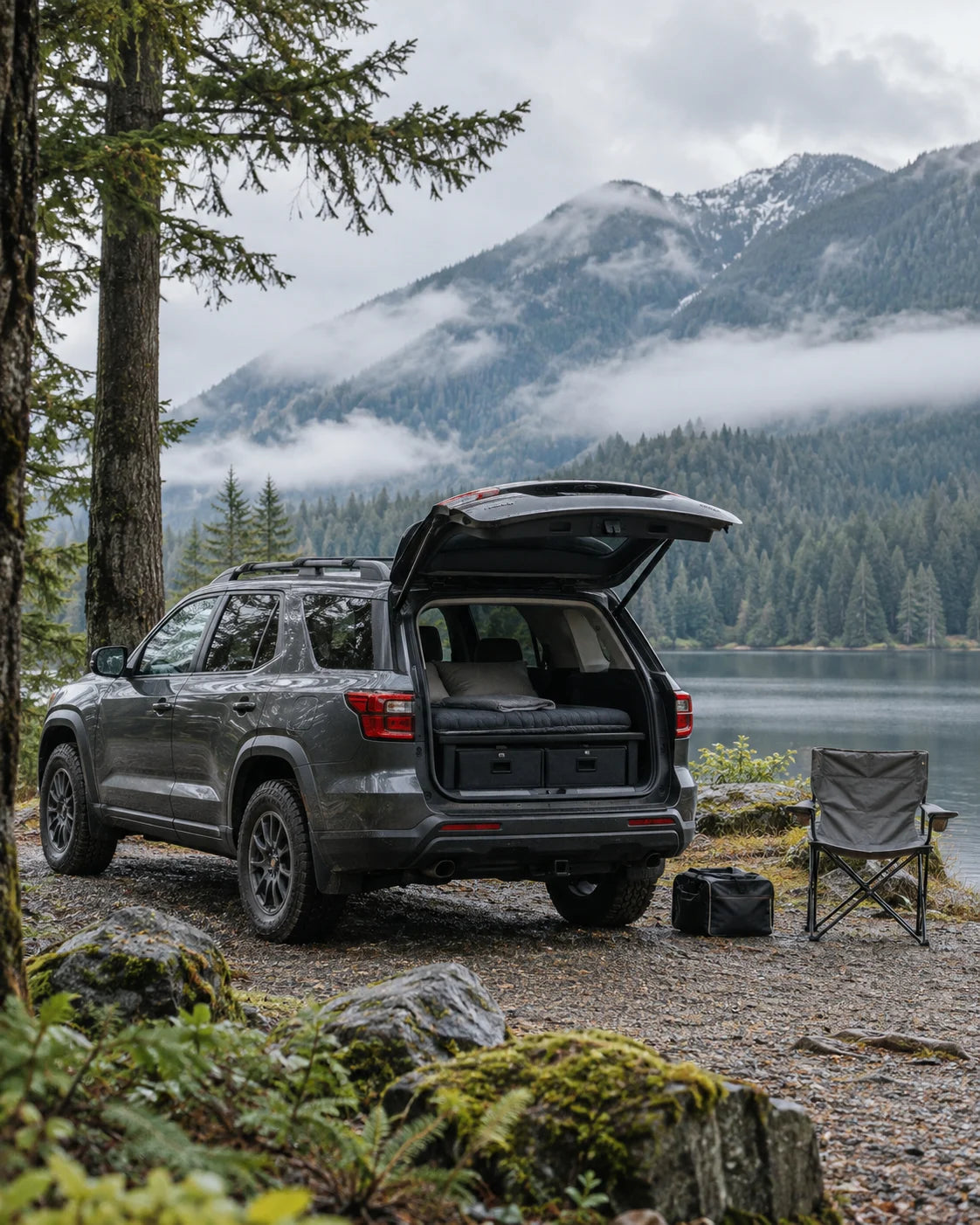
Sleeping in your vehicle can turn a long drive into a relaxed weekend, but only if the setup works when you arrive. Most problems, such as a mattress that won't lie flat, a valve that leaks, or a pump that doesn't fit the socket, are easy to catch at home. Run through this checklist before you pack.
1. Measure the usable floor
Fold or move the seats exactly as you plan to use them, then measure:
- Length: from the inside of the closed tailgate or liftgate to the back of the front seats. If you can slide the front seats forward, note both positions.
- Width: at the narrowest point, which is usually between the wheel wells.
- Height: from the floor to the ceiling, so you know whether you can sit up.
- Steps and gaps: any drop between the folded seatbacks and the cargo floor. Some mattresses have a separate section to fill this gap; others need a flat floor.
Write the numbers down in inches. A label that says a mattress fits most SUVs is not a measurement; your floor is. Our Fit Guide has a list of what to record.
2. Match the mattress to your numbers
Compare your measurements with the mattress's inflated dimensions on the product page, not the size of the box. Leave a little room on each side so the mattress isn't pressed against door panels and trim. Then check:
- Whether it's designed for the rear seat, the cargo area, or a full fold-flat floor.
- What's included, such as an air pump, a 12V adapter, a repair patch kit, or a storage bag. Rely on the list on the product page rather than the photos.
- How the pump is powered, and whether your vehicle's 12V socket stays on when the engine is off. Your owner's manual will tell you.
Browse options in Sleep Systems, and see Car Camping for window screens and privacy shades.
3. Do a test night in the driveway
Clear the floor of anything sharp, then inflate the mattress following its instructions. Lie on it, check the valves and seams, and leave it inflated overnight.
A mattress can feel softer in the morning without leaking, because air cools and contracts as the temperature drops at night. Top it up and check again. If it goes flat within a few hours, look for a leak before your trip, not after.
While it's set up, open and close every door you'll need, and make sure you can reach the door handles and unlock the vehicle from the inside.
4. Plan for air, temperature, and safety
- Leave windows open slightly for ventilation; window screens help keep insects out.
- Never run the engine or a fuel-burning heater inside a closed vehicle while you sleep. Carbon monoxide can build up, especially if snow or terrain blocks the exhaust.
- Use the mattress only while the vehicle is parked. It is not a seat, and nobody should ride on it.
- Keep your keys, a flashlight, and your phone within reach.
- Check the rules where you plan to stay; not every parking area or campground allows overnight sleeping in vehicles.
If you plan to run a 12V cooler, a fan, or lights overnight, a portable power station avoids draining your vehicle's starting battery.
5. Pack it down properly
Wipe the mattress clean and let it dry completely before you fold it, since packing it damp can lead to mildew. Deflate it fully, keep the pump, adapter, and patch kit in the storage bag, and stow it so it can't slide around as loose cargo on the drive home.
Quick checklist
- Floor measured with the seats in their final position
- Inflated dimensions checked against your measurements
- Pump, adapter, and patch kit confirmed and packed
- Test night completed and valves checked
- Ventilation and window screens planned
- Overnight parking rules checked
General planning notes, not product-specific instructions. Follow the product documentation and your vehicle’s owner’s manual.
← Back to the journal